Academic Staff
Valeria Zitz
Profile
I am a PhD researcher at the TECO Lab (Karlsruhe Institute of Technology), working on the development of embedded wearable systems for personalized preventive healthcare. My research spans sensor technology, PCB design, and embedded signal processing to enable multimodal physiological sensing. Beyond diagnostics and biofeedback, I focus on non-invasive therapeutic applications such as photobiomodulation and thermal stimulation. By combining technical innovation with clinical validation and human-centered design, I aim to transform wearables into intelligent, comfort-optimized companions for diagnostics, therapy, and everyday health interventions.
Short CV
- since 2024 PhD Candidate at TECO
- 2023 – 2024 Researcher, Freie Universität Berlin
- 2023 M.Sc. Computer Science, Karlsruhe University of Applied Sciences
- 2022 – 2023 Technical Product Lead, EnBW Energie Baden-Württemberg AG
- 2022 – 2024 Lecturer for Human Computer Interaction, Karlsruhe University of Applied Sciences
- 2021 – 2024 Lecturer for Usability & Audiovisual Communication, Heilbronn University of Applied Sciences
- 2021 B.Sc. Computer Science, Karlsruhe University of Applied Sciences
- 2016 B.Sc. Journalism, Karlsruhe University of Applied Sciences
Research Interests
- Embedded Sensing & System Design
- Digital Biomarkers & Preventive Medicine
- Health Applications & Clinical Translation
Teaching
- Proseminar Mobile Computing & Seminar Ubiquitäre Systeme: SS2026, WS 2025/2026
- Proseminar Mobile Computing: SS 2025
- Praxis der Softwareentwicklung (PSE): WS 2024/2025
Projects
Calmables
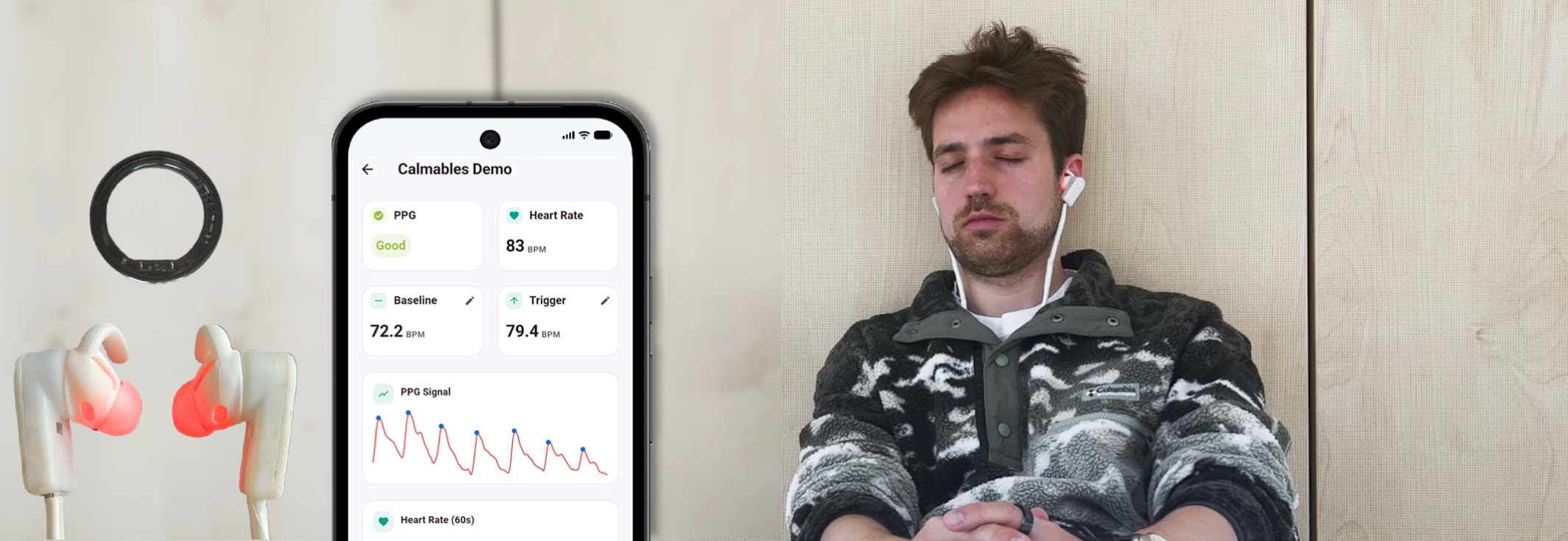
Calmables is a closed-loop infrared earable designed to explore thermal biofeedback for relaxation support. The system uses heart-rate data from a smart ring to establish an individual baseline and identify periods of elevated physiological activation. When a personalized threshold is reached, the earable delivers a subtle, localized warming stimulus to the ear using infrared light. A companion smartphone application coordinates the interaction and visualizes physiological changes, while independent temperature limits and communication fail-safes ensure safe operation. In a preliminary placebo-controlled evaluation with 18 participants, the active prototype received higher ratings for perceived relaxation and recovery support than an identical-looking placebo device. Calmables demonstrates how physiological sensing and unobtrusive thermal stimulation can be combined to make biofeedback tangible and support brief moments of recovery.
Heatables
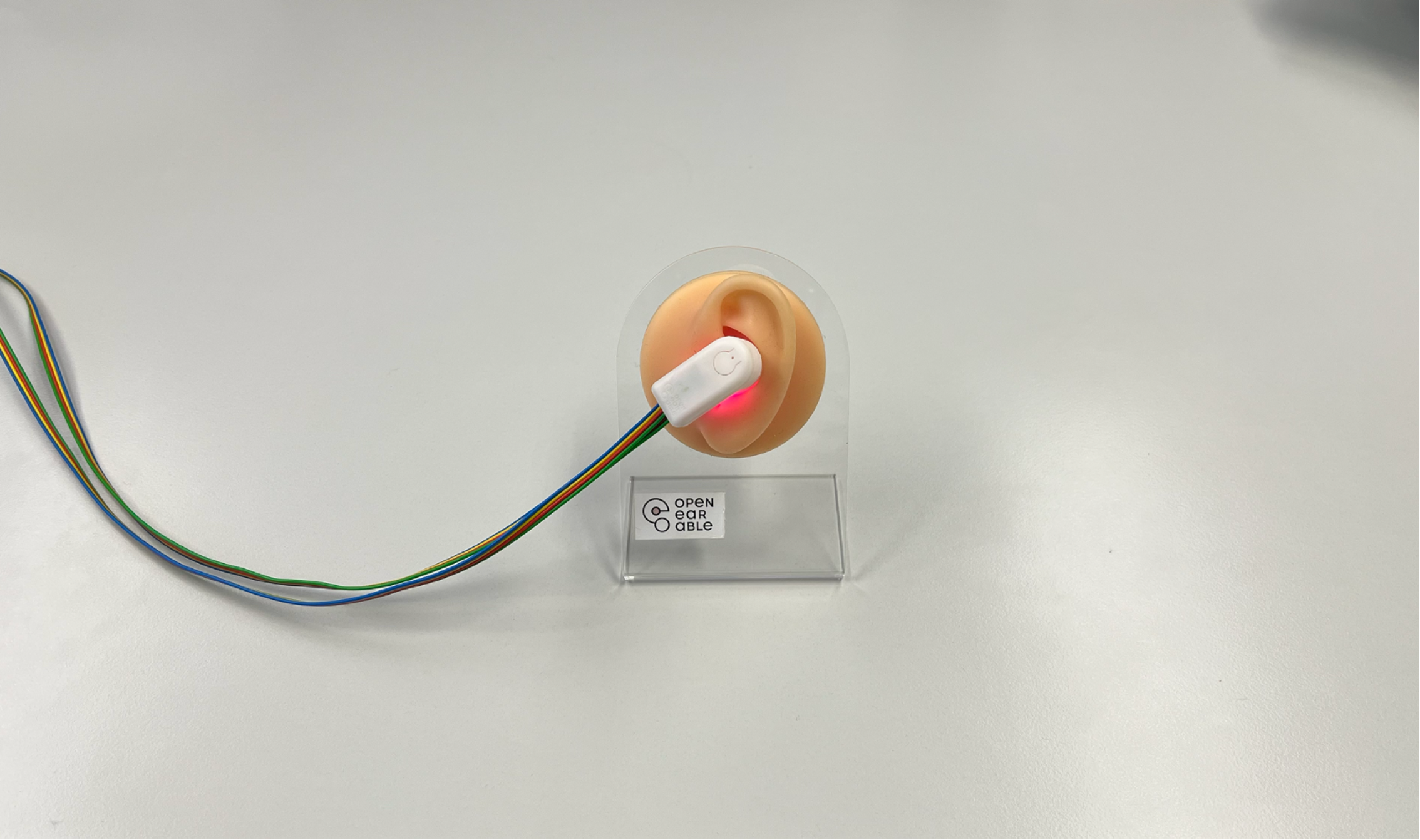
Heatables investigates the use of near-infrared (NIR) and infrared (IR) optical stimulation within the human ear to modulate thermal perception and comfort. The project explores the auditory canal as a novel physiological and perceptual interface for personalized thermal regulation.

EarStreAM
EarStreAM is a closed-loop earable system that detects stress through in-ear sensing and automatically delivers personalized, LLM-generated meditation, adapting the intervention until the user’s physiological state returns toward baseline.
UltrasonicSpheres
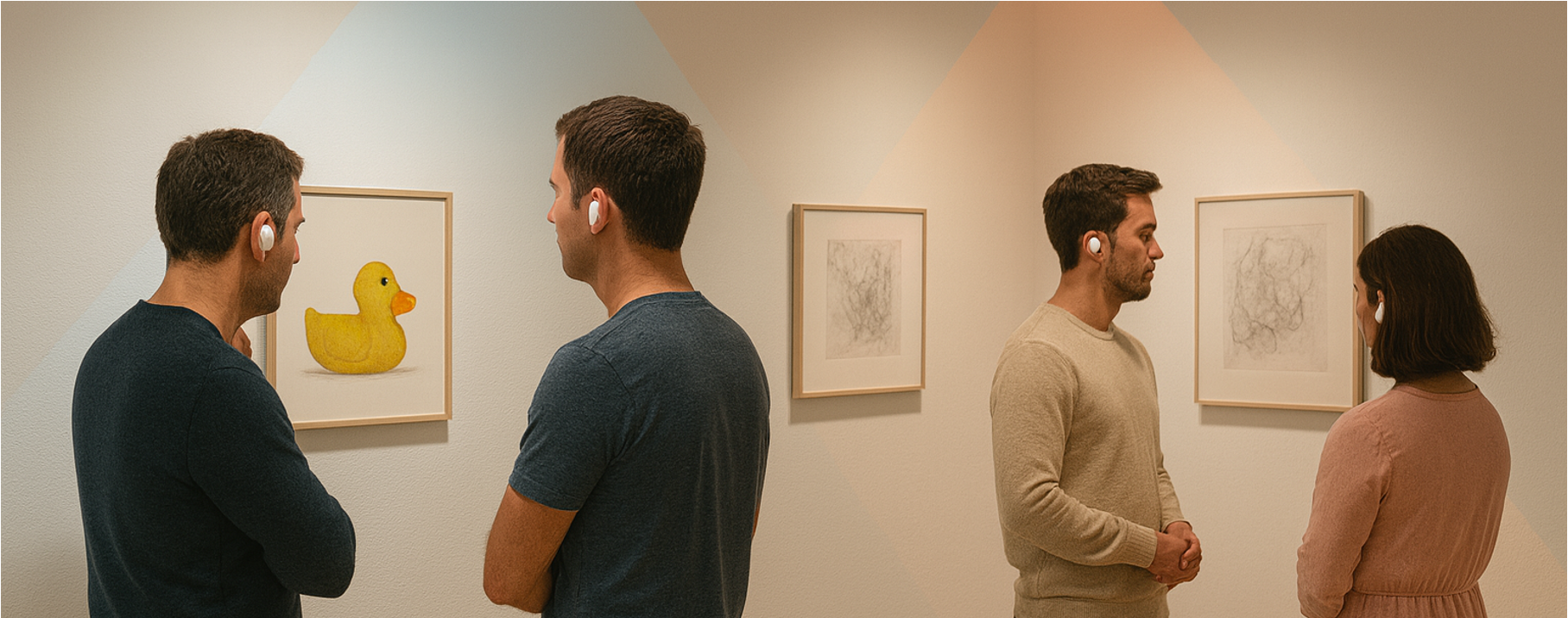
UltrasonicSpheres creates localized ultrasonic audio zones in space, audible only when wearing OpenEarable 2.0. As users move between zones, they automatically hear the corresponding audio — with spatial direction preserved and no sound leaking into the environment. The system enables natural, hands-free, location-based audio experiences using off-the-shelf speakers and open-source earables.

KD²School
An interdisciplinary graduate school focused on designing adaptive IT systems that improve economic decision-making. The research explores the intersection of human behavior, technology, and institutions.
EarXplore
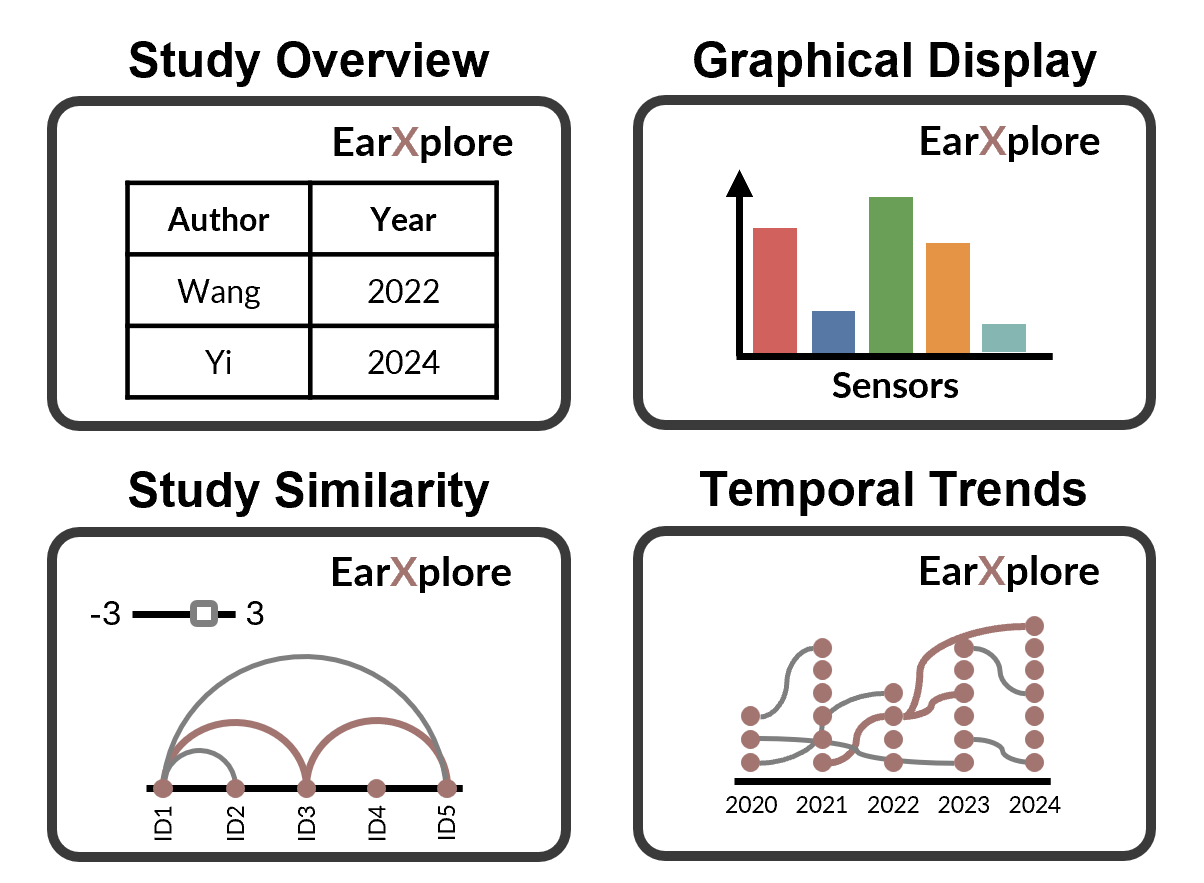
EarXplore is an evolving, interactive database that organizes and visualizes research on earables. It helps the community explore existing studies, uncover trends, and shape the future of earable technology.

OpenEarable
OpenEarable is an open-source, AI-enabled platform for ear-based sensing applications with true wireless audio. The modular and reconfigurable platform is packed with a variety of high-precision sensors, designed for both development and research applications.
Theses
Recognition and Classification of Allergy-Related Events from Wearable Sensor Data
Allergy-related reactions such as eye rubbing, palate rubbing, swallowing, and throat clearing occur repeatedly throughout the day but are rarely documented reliably. This thesis aims to develop a machine-learning pipeline that automatically recognizes such events in continuous multimodal wearable-sensor data and subsequently classifies them into distinct reaction types. The proposed approach consists of two stages: Event recognition: Detecting when a potentially relevant event occurs within a continuous sensor stream.Event classification: Determining which type of allergy-related reaction occurred.
Hardware Design and Prototyping of a Wearable Device for Personal Air Quality Monitoring
Airable is a custom-built smart hair pin or necklace accessory that integrates miniature environmental sensors to support personal air-quality monitoring and pollen-allergy research. The goal of this thesis is to design and evaluate the a basic functional prototype, combining sensing, wireless communication, power management, and a wearable form factor.
Jobs
Topic Areas
Publications
Küttner, M.; Zitz, V.; Gerling, K. M.; Beigl, M.; Röddiger, T.
2025. Companion of the 2025 ACM International Joint Conference on Pervasive and Ubiquitous Computing; Espoo, Fannland, 12.-16.10.2025, 439–443, Association for Computing Machinery (ACM). doi:10.1145/3714394.3754416
Zitz, V.; Küttner, M.; Hummel, J.; Knierim, M. T.; Beigl, M.; Röddiger, T.
2025. Proceedings of the ACM International Symposium on Wearable Computers (ISWC’25), 91–97, Association for Computing Machinery (ACM). doi:10.1145/3715071.3750421
Röddiger, T.; Zitz, V.; Hummel, J.; Küttner, M.; Lepold, P.; King, T.; Paradiso, J. A.; Clarke, C.; Beigl, M.
2025. CHI EA ’25: Proceedings of the Extended Abstracts of the CHI Conference on Human Factors in Computing Systems, Art.-Nr.: 713, Association for Computing Machinery (ACM). doi:10.1145/3706599.3721161